

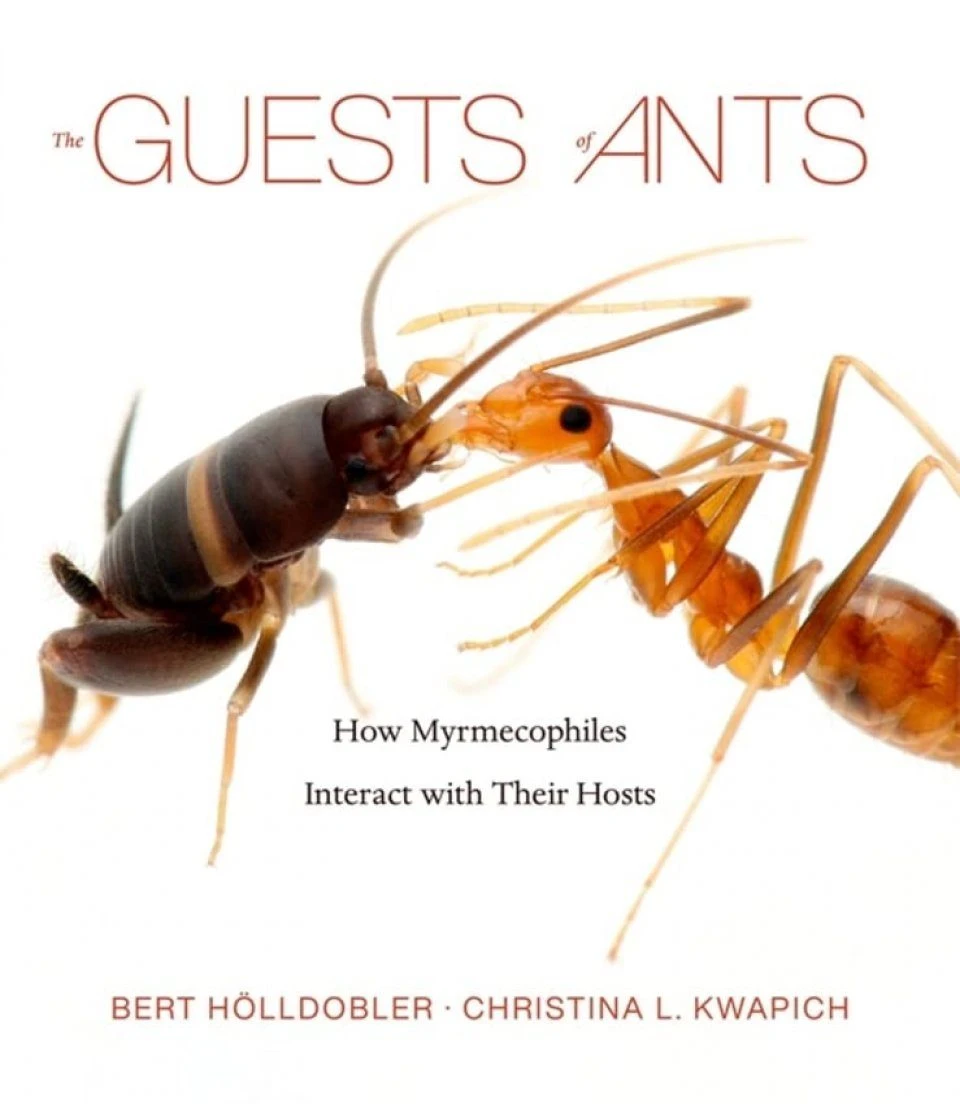
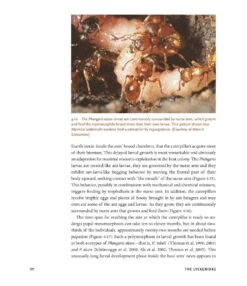
The Guests Of Ants
Original price was: $59.95.$41.97Current price is: $41.97.
- Nature-friendly materials, for a better planet.
- 100% High-Quality Guarantee
- No Compromise on Quality
- Get the Best for Less

About this book
A fascinating examination of socially parasitic invaders, from butterflies to bacteria, that survive and thrive by exploiting the communication systems of ant colonies.
Down below, on sidewalks, in fallen leaves, and across the forest floor, a covert invasion is taking place. Ant colonies, revered and studied for their complex collective behaviours, are being infiltrated by tiny organisms called myrmecophiles. Using incredibly sophisticated tactics, various species of butterflies, beetles, crickets, spiders, fungi, and bacteria insert themselves into ant colonies and decode the colonies’ communication system. Once able to “speak the language,” these outsiders can masquerade as ants. Suddenly colony members can no longer distinguish friend from foe.
Pulitzer Prize-winning author and biologist Bert Hölldobler and behavioural ecologist Christina L. Kwapich explore this remarkable phenomenon, showing how myrmecophiles manage their feat of code-breaking and go on to exploit colony resources. Some myrmecophiles slip themselves into their hosts’ food sharing system, stealing liquid nutrition normally exchanged between ant nestmates. Other intruders use specialized organs and glandular secretions to entice ants or calm their aggression. Guiding readers through key experiments and observations, Hölldobler and Kwapich reveal a universe of behavioural mechanisms by which myrmecophiles turn ants into unwilling servants.
As The Guests of Ants makes clear, symbiosis in ant societies can sometimes be mutualistic, but, in most cases, these foreign intruders exhibit amazingly diverse modes of parasitism. Like other unwelcome guests, many of these myrmecophiles both disrupt and depend on their host, making for an uneasy coexistence that nonetheless plays an important role in the balance of nature.
Contents
Preface [Bert Hölldobler]1. Superorganisms: A Primer
Mating and Colony Founding
Division of Labor among Worker Ants
Division of Labor in Reproduction
Parasites inside the Superorganism
2. Inside and on the Bodies of the Ants
Mutualistic Symbionts: The Case of Blochmannia
Internal Parasites and Parasitoids that Affect the Ants’ Behavior
Phoretic Myrmecophiles and Parasites on the Bodies of Host Ants
3. Recognition, Identity Theft, and Camouflage
Nestmate Recognition
Identity Theft and Other Means of Intrusion
Cuticular Hydrocarbons Revisited
4. The Lycaenidae: Mutualists, Predators, and Parasites
The Mutualists
Predators and Socially Parasitic Myrmecophiles in the Genus Phengaris
Miletine Predators, Tripartite Symbiosis, and Indirect Parasitism
Parasitoids Attacking Lycaenid Myrmecophiles
5. Foraging Paths and Refuse Sites
Ant-Mugging Flies on the Ants’ Trails
Bengalia: Brood and Booty Snatcher Flies
The Beetle Amphotis marginata: Highwayman of Lasius fuliginosus
Predators and Scavengers: The Story of Some Pella Species
On the Ants’ Trails
6. Spiders and Other Mimics, Pretenders, and Predators
Transformational and Compound Mimics
Collective Mimicry
Backpacks, Shields, and False Heads
Locomotory Mimicry
Odor Cloaks
Phoretic Spiders Take Flight
Spider Predators of Veromessor pergandei
7. The Mysteries of Myrmecophilous Crickets
Strigilators and Thieves
Specialized Mouthparts
Host-Specialists and Host-Generalists
Odor Mimicry and Trail Following
The Mystery of Cricket Body Size
Phenotypic Plasticity and Cryptic Speciation
Gaster Mimicry and Egg Mimicry
Island Endemics and Island Hoppers
8. Grades of Myrmecophilous Adaptations
Pella humeralis: The Predator and Scavenger
Dinarda Beetles: The Sneaky Thieves
Breaking the Code: Lomechusa and Lomechusoides
Claviger: Pretending to Be a Piece of Booty?
Paussinae: The Myrmecophilous Dracula Beetles
9. Myrmecophiles in the Ecosystem of Ant Nests
The Nest Ecosystem of the Harvester Ant Pogonomyrmex badius
The Role of Myrmecophiles in the Ecosystem of Mound-Building Wood Ants
The Case of Army Ants, Especially the Leptogenys “Army Ants”
Networks and Colony-Level Censuses
Infestation by Myrmecophilous Parasites and Colony Traits
10. Vertebrates and Ants
Myrmecophiles of a Feather
Anting
Fish and Amphibious Associates
Reptile Eggs in Ant Nests
Horned Lizards, Blind Snakes, and Legless Lizards
Epilogue
Glossary
References
Acknowledgments
Index
Biography
Bert Hölldobler is the Robert A. Johnson Professor in Social Insect Research at Arizona State University. He was previously Professor of Biology and Alexander Agassiz Professor of Zoology at Harvard University and subsequently held the chair for Behavioral Physiology and Sociobiology at the University of Würzburg, Germany. He is an elected member of many academies, including the American Academy of Arts and Sciences, the U.S. National Academy of Sciences, and the German National Academy of Sciences, Leopoldina. He has received many awards, among them the Pulitzer Prize for , co-authored with E. O. Wilson.
Christina L. Kwapich is Assistant Professor of Biology at the University of Massachusetts, Lowell, and President-elect of the North American Section of the International Union for the Study of Social Insects.
| Select | Hardback, Jul 2022 |
|---|
Be the first to review “The Guests Of Ants”
Related products
![Fauna Sinica: Insecta, Volume 13: Hemiptera: Heteroptera: Nabidae [Chinese]](https://www.wildlifebookshelf.com/wp-content/uploads/2025/03/114567-247x337.webp)
Bugs (Hemiptera - Homoptera & Heteroptera)
Fauna Sinica: Insecta, Volume 13: Hemiptera: Heteroptera: Nabidae [Chinese]
![Fauna Sinica: Insecta, Volume 69: Thysanoptera [Chinese] (2-Volume Set)](https://www.wildlifebookshelf.com/wp-content/uploads/2025/03/253955-247x175.webp)
![Naïades Et Autres Bivalves D'Eau Douce De France [Naiades And Other Freshwater Bivalves Of France]](https://www.wildlifebookshelf.com/wp-content/uploads/2025/03/239318-247x358.webp)

Insects & other Invertebrates
Naïades Et Autres Bivalves D’Eau Douce De France [Naiades And Other Freshwater Bivalves Of France]
![Haplogynae Spiders From Hainan, China [Chinese]](https://www.wildlifebookshelf.com/wp-content/uploads/2025/03/208657-247x329.webp)
Arthropods (excl. insects)

Arthropods (excl. insects)
Insects & other Invertebrates
Bugs (Hemiptera - Homoptera & Heteroptera)

Arthropods (excl. insects)
Reviews
There are no reviews yet.